NSF Standard Matcher & Filter Replacement Calculator
Select the contaminants you want to target and your household daily drinking-water use to see required NSF/ANSI certifications and real filter change intervals.
Quick guide to NSF/ANSI drinking-water standards
| Standard | What It Certifies | Typical Filter Type |
|---|---|---|
| NSF/ANSI 42 | Aesthetic effects: chlorine taste, odor, particulate class | Pitchers, fridge filters, carbon blocks |
| NSF/ANSI 53 | Health effects: lead, cysts (Cryptosporidium/Giardia), VOCs, PFOA/PFOS | Dense activated carbon block, gravity/countertop, RO |
| NSF/ANSI 58 | Reverse osmosis reduction of TDS, fluoride, arsenic V, radium, nitrates | Under-sink & countertop RO membranes |
| NSF/ANSI 401 | Incidental emerging contaminants (certain pharmaceuticals, herbicides, BPA) | Certified multi-stage carbon / RO |
Frequently asked questions
Does a standard NSF 42 pitcher remove lead or fluoride?
No. NSF/ANSI 42 covers aesthetic chlorine taste and odor only. For lead or PFAS look specifically for NSF/ANSI 53 certification; for fluoride and dissolved solids (TDS) look for NSF/ANSI 58 reverse osmosis.
Why should I replace a cartridge by gallons instead of only by calendar months?
Rated filter capacity is measured in gallons processed. A family of five drinking 5 gallons per day exhausts a 40-gallon pitcher filter in 8 days, whereas a 1-person household stretches the same cartridge over a month.
What does "tested to NSF standards" mean vs "NSF certified"?
NSF or WQA certification means an independent accredited lab audited the product and manufacturing facility and lists it in a public registry. "Tested to NSF standards" often refers to internal or one-off testing rather than full certification.
Related buying guides
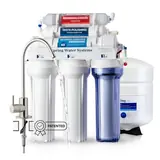 Best Under Sink Reverse Osmosis System (2026)A spec-based comparison of under-sink reverse osmosis systems evaluated by NSF 58 ratings, GPD flow, pure-to-drain ratios, and tank size.Read
 NSF/ANSI 42, 53, 58 & 401 Water Filter Standards ExplainedSeparate third-party NSF/ANSI drinking-water certifications from vague marketing claims and size cartridge replacement intervals by gallons.Read
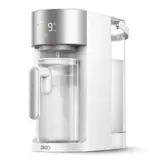 Best Countertop Water Filter (2026)A spec-based comparison of countertop water filters evaluated by NSF 58 standards, filtration stages, tank capacities, and counter space.Read
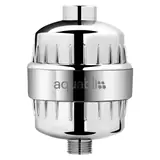 Best Shower Head Water Filter (2026)A spec-based comparison of shower head filters evaluated by filtration media, NSF certifications, water pressure, and replacement schedules.Read
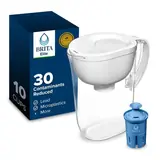 Best Water Filter Pitcher (2026)A spec-based comparison of water filter pitchers evaluated by NSF 42, 53, and 58 standards, filter lifespans, and refrigerator shelf fit.Read